Will AI Take Your Job? A Realistic Look
Will AI take your job? Explore the realistic impact of AI on AI jobs, identifying threats, opportunities, and skills needed to thrive.
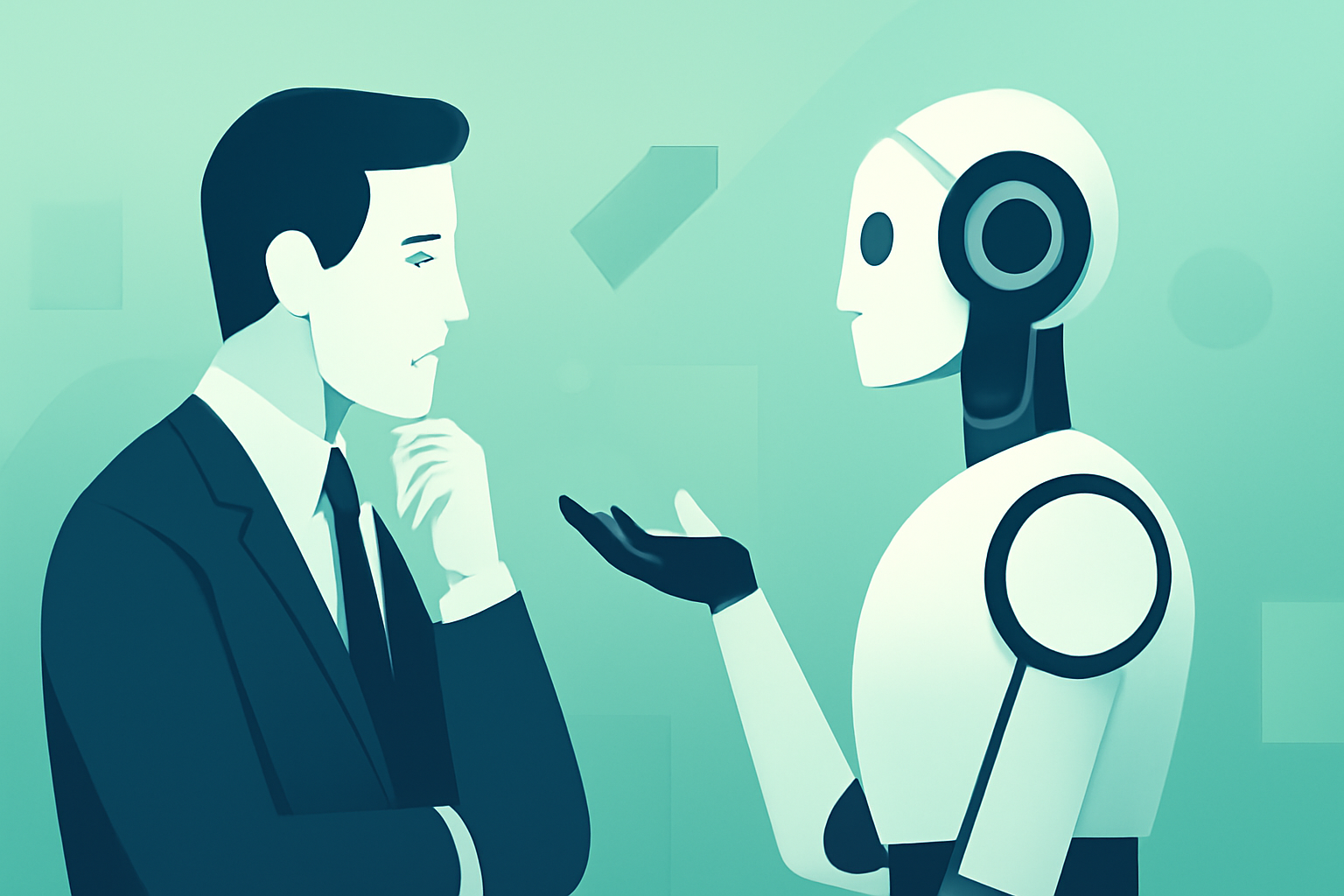
The doomsayers are loud, predicting a jobless future where artificial intelligence has rendered human workers obsolete. But is this truly the reality for AI jobs, or is it a sensationalized narrative? Let's cut through the noise and explore what’s actually happening in the job market as AI technology evolves.
The Real Threat: Not Replacement, But Transformation
The fear of AI outright replacing millions of workers is a common one, but it’s often an oversimplification. For decades, technology has changed the workplace. The assembly line automated tasks that once required skilled artisans. Computers digitized paperwork and communication. AI is simply the next, albeit more powerful, wave. The immediate threat isn't mass unemployment, but rather a significant shift in the types of skills that are in demand. Jobs with highly repetitive, predictable tasks are indeed vulnerable. Think data entry, basic customer service inquiries, or simple assembly line monitoring.
However, AI excels at pattern recognition and processing vast amounts of data, not necessarily at complex problem-solving, creative thinking, or nuanced human interaction. This is where human workers will likely pivot.
Jobs AI is Likely to Augment, Not Eliminate
Instead of aiming to replace you, AI is poised to become a powerful co-pilot for many professions. Consider these examples:
Healthcare Professionals
Radiologists, for instance, are already benefiting from AI diagnostic tools that can flag anomalies in X-rays and CT scans with remarkable accuracy. This doesn't replace the radiologist; it allows them to review more scans faster, focus on complex cases, and ultimately improve patient outcomes. The AI assists, but the final diagnosis and patient care plan still rest with the human expert.
Software Developers
AI-powered coding assistants, like GitHub Copilot, can suggest code snippets, identify bugs, and even write boilerplate code. This frees up developers to concentrate on higher-level architectural design, problem-solving, and innovative feature development. The speed at which they can build and iterate could double.
Marketers and Content Creators
While AI can generate basic marketing copy or social media posts, it struggles with genuine emotional connection, brand storytelling, and understanding subtle audience sentiment. AI can churn out drafts, but a human marketer is still needed to refine the message, assess its effectiveness, and guide the overall strategy.
Financial Analysts
AI can process financial reports, identify trends, and perform complex calculations far faster than humans. This means analysts can spend less time crunching numbers and more time on strategic analysis, client consultation, and developing investment strategies. The AI acts as a super-powered research assistant.
The Growth Sectors: Where AI Creates New AI Jobs
The AI revolution isn't only about augmentation; it's also a powerful job creator. The very development and deployment of AI systems require a skilled workforce, leading to entirely new career paths.
- AI Engineers: Designing, building, and maintaining AI models and algorithms.
- Machine Learning Specialists: Focusing on training and optimizing AI systems for specific tasks.
- Data Scientists: Collecting, cleaning, and interpreting data to feed AI models and extract insights.
- AI Ethicists and Governance Specialists: Ensuring AI is developed and used responsibly and fairly.
- Prompt Engineers: Crafting effective prompts for AI models to generate desired outputs, a skill becoming increasingly valuable.
- AI Trainers and Educators: Teaching others how to work with and understand AI technologies.
These roles are in high demand and offer competitive salaries, demonstrating that AI can be a net job creator. The Bureau of Labor Statistics projects that employment in computer and information technology occupations will grow 13% from 2022 to 2032, much faster than the average for all occupations, with a significant portion of this growth driven by AI.
Future-Proofing Your Career: Skills for the AI Era
So, how do you ensure you're not left behind? The key is continuous learning and adaptability. Focus on developing skills that AI cannot easily replicate.
Embrace "Human" Skills
- Critical Thinking and Problem-Solving: AI can offer solutions, but humans are needed to define the problems, evaluate the AI's suggestions, and make complex decisions.
- Creativity and Innovation: Generating novel ideas, artistic expression, and strategic vision remain distinctly human capabilities.
- Emotional Intelligence and Empathy: Understanding and responding to human emotions, building relationships, and providing genuine care are crucial in many roles.
- Collaboration and Communication: Working effectively within teams, articulating complex ideas, and negotiating are vital interpersonal skills.
- Adaptability and Lifelong Learning: The most important skill might be the willingness and ability to learn new technologies and adapt to changing job requirements.
Develop AI Literacy
You don't necessarily need to become an AI engineer, but understanding how AI works, its capabilities, and its limitations will be a significant advantage. This includes learning how to use AI tools effectively in your current role. For example, a marketing professional who masters using AI for market research and content ideation will be more valuable than one who ignores these tools.
Consider Upskilling and Reskilling
If your current role is heavily based on repetitive tasks, proactively explore training programs. Many online platforms (Coursera, edX, Udemy) offer courses in data analysis, AI fundamentals, and soft skills. Look for certifications that are recognized in your industry. For example, if you're in customer service, consider courses that teach you how to manage AI chatbots while still providing an empathetic human touch.
Common Mistakes to Avoid When Navigating AI Jobs
- Ignoring AI Entirely: Pretending AI doesn't exist won't make it go away. Engage with it.
- Assuming AI Will Replace You 100%: This is rarely the case. Focus on how you can use AI.
- Not Investing in Continuous Learning: The skills landscape is changing rapidly. Stagnation is decline.
- Fear-Mongering Over Fact-Finding: Base your strategy on data about AI jobs and trends, not sensational headlines.
The Future of Work: A Human-AI Partnership
The narrative of AI taking jobs is incomplete. The reality is more nuanced and, for many, more hopeful. AI is a powerful tool that will reshape industries, automate certain tasks, but also create new opportunities and enhance human capabilities. By focusing on developing uniquely human skills, embracing AI literacy, and committing to lifelong learning, you can not only survive but thrive in the evolving landscape of AI jobs. The future of work is likely to be a collaborative effort between humans and artificial intelligence, where each contributes their unique strengths.
Key Takeaways:
- AI is more likely to augment and transform jobs than to eliminate them entirely.
- Highly repetitive and predictable tasks are most vulnerable to automation.
- New AI jobs are being created in areas like AI engineering, data science, and ethical AI development.
- Developing human-centric skills like critical thinking, creativity, and emotional intelligence is crucial.
- AI literacy and a commitment to lifelong learning are essential for future career success.