Visa vs Mastercard vs Amex: Best Credit Card Network?
Choosing the right credit card network is crucial. Explore Visa vs Mastercard vs American Express to find the best fit for your spending and travel needs.
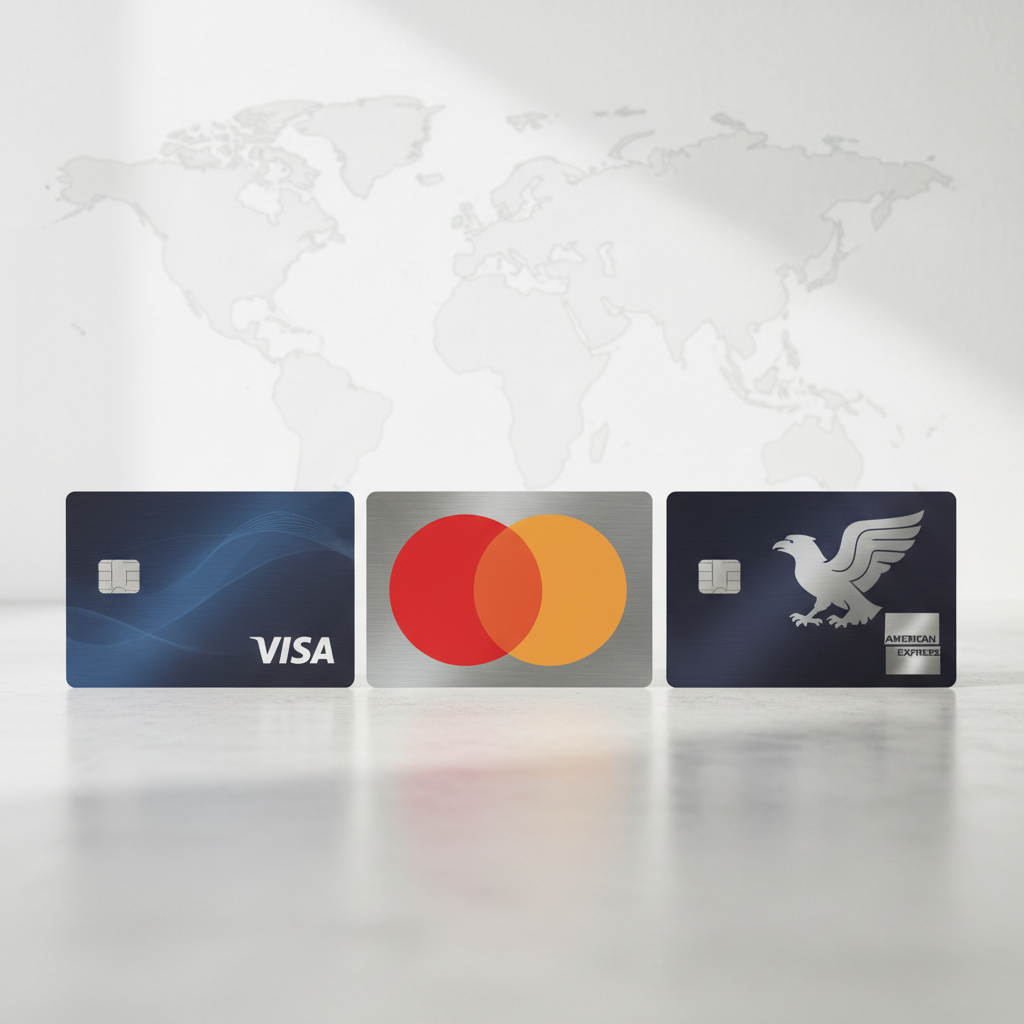
Visa vs Mastercard vs American Express: Which Credit Card Network is Best for You?
When you’re choosing a new credit card, your focus often lands on the bank, the rewards, or the interest rates. But did you know that the Visa vs Mastercard vs American Express network behind your card plays a significant role in its utility, acceptance, and even the perks you receive? Understanding these differences is key to selecting a credit card that truly aligns with your financial lifestyle and spending habits.
These three giants—Visa, Mastercard, and American Express—are the primary credit card networks that facilitate transactions worldwide. While they all allow you to make purchases with borrowed money, their business models, global acceptance, and the suite of benefits they offer can vary considerably. Let's break down what each network brings to the table, helping you make an informed decision for your next credit card.
Understanding Credit Card Networks: Not Just a Logo
Before diving into the specifics of Visa, Mastercard, and American Express, it’s important to clarify their role. A credit card network, also known as an association, acts as the intermediary between the merchant's bank (acquirer) and the cardholder's bank (issuer).
Here's how it generally works:
- Issuer: The bank or financial institution that issues you the credit card (e.g., Chase, Capital One, Citibank). They set the interest rates, fees, and rewards programs.
- Network: Visa, Mastercard, or American Express. They process the transaction, connecting the merchant's bank to your bank. They also establish the rules and infrastructure for payments.
- Acquirer: The merchant's bank that processes transactions on behalf of the business.
Visa and Mastercard operate primarily as payment processors. They partner with thousands of banks and credit unions worldwide to issue cards. American Express, on the other hand, often acts as both the network and the issuer, though they do partner with some institutions to issue co-branded cards. This integrated model gives American Express more control over the customer experience and benefits, but it also impacts their acceptance rates compared to Visa and Mastercard.
Visa: The World's Most Accepted Network
Visa is, by many measures, the largest payment network globally, boasting unparalleled acceptance in virtually every corner of the world. If broad acceptance is your top priority, especially for international travel or daily spending, a Visa card is often a reliable choice.
Key Characteristics of Visa:
- Global Acceptance: Visa cards are accepted in over 200 countries and territories at tens of millions of merchant locations. This extensive reach makes them highly convenient for international travelers.
- Widespread ATM Access: You can use your Visa card to withdraw cash from a vast network of ATMs worldwide.
- Variety of Issuers: Thousands of financial institutions issue Visa cards, leading to a massive array of options, from basic secured cards to premium travel rewards cards. This means you have a wide selection of benefits, interest rates, and fee structures to choose from.
- Tiered Benefits: Visa offers different tiers of cards – Traditional, Signature, and Infinite – each coming with a progressively richer set of benefits like extended warranties, rental car insurance, travel accident insurance, and concierge services. The specific benefits depend on the issuing bank and the card tier.
Who is Visa Best For?
- Frequent International Travelers: Its near-universal acceptance means you're unlikely to encounter issues abroad.
- Everyday Spenders: For daily purchases, Visa offers reliable processing and a broad range of rewards programs through various issuers.
- Those Seeking Variety: With so many issuers, you can find a Visa card tailored to almost any financial need or credit profile.
Mastercard: A Strong Contender with Broad Reach
Mastercard stands shoulder-to-shoulder with Visa in terms of global acceptance and market share. While perhaps slightly behind Visa in sheer numbers, the difference in practical terms is often negligible. Mastercard is also a payment processor, partnering with numerous banks to issue cards.
Key Characteristics of Mastercard:
- Extensive Global Acceptance: Mastercard is accepted in over 210 countries and territories at millions of locations, rivalling Visa's reach. You'll rarely find a merchant that accepts Visa but not Mastercard, or vice-versa.
- Similar ATM Network: Like Visa, Mastercard provides access to a large global network of ATMs.
- Diverse Product Line: Mastercard offers various card tiers – Standard, World, and World Elite – each providing different levels of benefits. These can include cell phone protection, price protection, concierge services, and travel assistance. Again, the exact benefits depend on the issuing bank.
- Unique Perks: Some Mastercard World Elite benefits are particularly strong, such as access to exclusive experiences, higher levels of travel insurance, and even some complimentary memberships.
Who is Mastercard Best For?
- Individuals Prioritizing Broad Acceptance: Like Visa, Mastercard offers peace of mind for both domestic and international transactions.
- Value-Conscious Consumers: Mastercard’s World and World Elite tiers often come with valuable built-in protections and benefits that can save cardholders money.
- Travelers: Its extensive global reach makes it an excellent companion for trips abroad, especially when paired with a card offering no foreign transaction fees.
American Express (Amex): Premium Perks and Customer Service
American Express operates on a different model. While Visa and Mastercard are primarily networks, American Express is often both the network and the issuer. This integrated approach allows Amex to offer a distinct, often premium, experience, but it comes with a trade-off in terms of acceptance.
Key Characteristics of American Express:
- Premium Benefits: Amex cards are renowned for their lucrative rewards programs, luxury travel perks (e.g., airport lounge access, hotel elite status), comprehensive travel insurance, and exclusive offers.
- Exceptional Customer Service: American Express consistently ranks highly for its customer service, known for its responsiveness and problem-solving capabilities.
- Strong Brand Loyalty: Many Amex cardholders are fiercely loyal due to the perceived value and service.
- Higher Annual Fees: To support their robust benefits and customer service, many premium Amex cards come with substantial annual fees.
- Lower Acceptance: While acceptance has improved dramatically, American Express is still not as universally accepted as Visa or Mastercard, particularly with smaller merchants or outside major urban centers and tourist destinations globally. Merchants often pay higher interchange fees to Amex, which can be a deterrent.
Who is American Express Best For?
- High Spenders: Individuals who can maximize the rewards and benefits offered, especially on travel and specific spending categories.
- Luxury Travelers: Those who value perks like airport lounge access, hotel upgrades, and premium travel insurance.
- Consumers Prioritizing Customer Service: If having top-tier support for any card-related issues is important to you, Amex excels here.
- Individuals Who Can Justify Annual Fees: The value derived from the benefits should outweigh the cost of the annual fee.
Head-to-Head Comparison: Visa vs Mastercard vs American Express
Let's summarize the key differences to help you decide.
| Feature | Visa | Mastercard | American Express |
|---|---|---|---|
| Business Model | Payment Processor | Payment Processor | Network & Issuer (mostly) |
| Global Acceptance | Excellent (Most accepted worldwide) | Excellent (Near-universal acceptance) | Good (Improved, but less than V/MC) |
| Benefits/Perks | Varies by issuer/tier (Signature/Infinite) | Varies by issuer/tier (World/World Elite) | Often premium, strong travel & lifestyle |
| Customer Service | Handled by issuer | Handled by issuer | Excellent (Amex directly) |
| Annual Fees | Wide range, low to high | Wide range, low to high | Often higher, especially for premium cards |
| Target User | Broad appeal, travelers, everyday users | Broad appeal, travelers, everyday users | High spenders, luxury travelers, premium seekers |
| Interchange Fees | Generally lower | Generally lower | Typically higher for merchants |
Merchant Acceptance: A Critical Factor
The most significant practical difference for consumers often boils down to merchant acceptance.
- Visa and Mastercard: These two networks are almost universally accepted. If a merchant takes credit cards, they almost certainly take Visa and Mastercard. This makes them incredibly reliable for everyday purchases, online shopping, and international travel.
- American Express: While acceptance has grown, it's still possible to encounter merchants, especially smaller businesses, that do not accept American Express. This is largely due to the higher interchange fees Amex charges merchants compared to Visa and Mastercard. For travelers, this can mean carrying a backup Visa or Mastercard is a wise precaution when heading to regions where Amex might be less common.
Practical Tip: Always carry a Visa or Mastercard as a backup, even if your primary card is an American Express, especially when traveling or shopping at smaller, independent stores.
Beyond the Network: What Else to Consider?
While the network is important, it's only one piece of the puzzle. When selecting a credit card, you should also evaluate:
- Issuer-Specific Benefits: The bank issuing the card (e.g., Chase, Citi, Capital One) often layers its own perks on top of the network's benefits. These can include sign-up bonuses, specific rewards categories, unique redemption options, and customer support.
- Rewards Structure: Do you want cash back, travel points, or airline miles? Does the card offer bonus categories that align with your spending (e.g., groceries, gas, dining)?
- Annual Fees: Is the annual fee justified by the value you receive from the rewards and benefits?
- APR and Fees: While you should aim to pay your balance in full to avoid interest, understand the Annual Percentage Rate (APR) and other fees like foreign transaction fees or late payment fees.
- Credit Score Requirements: Ensure you meet the credit score criteria for the card you're applying for.
Example Scenarios:
- The Budget Traveler: If you're a backpacker venturing off the beaten path, a Visa or Mastercard with no foreign transaction fees will be your best friend due to superior acceptance.
- The Luxury Enthusiast: For someone who frequently flies business class, stays at premium hotels, and values airport lounge access, a high-tier American Express card could be invaluable. They'd likely pair it with a Visa or Mastercard for places that don't accept Amex.
- The Everyday Spender: For someone primarily using their card for groceries, gas, and online shopping, a Visa or Mastercard from an issuer offering strong cash-back rewards in those categories would be ideal. The network provides the reliability; the issuer provides the tailored rewards.
Making Your Choice: Empowerment Through Information
Ultimately, there's no single "best" credit card network. The optimal choice depends entirely on your individual spending habits, travel frequency, credit profile, and the types of benefits you value most.
- If widespread acceptance and reliability are paramount, especially for international use or as a primary card for all transactions, Visa or Mastercard are excellent choices. You'll have a vast array of cards to pick from, issued by numerous banks, allowing you to tailor rewards to your lifestyle.
- If you value premium perks, exceptional customer service, and are comfortable with potentially higher annual fees and slightly less universal acceptance, American Express could be a fantastic fit, particularly for high spenders and luxury travelers. Many Amex cardholders also carry a Visa or Mastercard as a backup for places where Amex isn't accepted.
Take the time to assess your financial needs, review the benefits offered by different cards and networks, and consider how each option fits into your overall financial strategy. Empower yourself with this knowledge, and you'll find the credit card that truly works for you.
FAQ
Q1: What is the main difference between Visa, Mastercard, and American Express?
A1: Visa and Mastercard are primarily payment processing networks that partner with banks to issue cards. American Express often acts as both the network and the issuer. This difference impacts global acceptance (Visa/Mastercard are more widely accepted) and the types of benefits offered (Amex typically offers premium, directly managed perks).
Q2: Is one network inherently better for earning rewards?
A2: Not directly. The rewards structure (cash back, points, miles) is primarily determined by the issuing bank, not the network itself. However, American Express's integrated model allows them to offer specific, often premium, rewards programs directly tied to their brand, which can be very lucrative for certain spending habits.
Q3: Which network is most accepted internationally?
A3: Visa and Mastercard are almost universally accepted across more than 200 countries and territories. While American Express acceptance has grown significantly, it is still less ubiquitous, particularly with smaller merchants or in less-traveled regions, making Visa or Mastercard a safer bet for international travel.
Q4: Do Visa, Mastercard, and American Express offer different security features?
A4: All three networks offer robust fraud protection, zero-liability policies, and advanced security features like EMV chip technology and tokenization to protect transactions. While the specifics of certain benefits (like extended warranty or price protection) can vary by card tier and issuer, the fundamental security levels are high across all major networks.
Q5: Can I have a Visa and a Mastercard or an Amex at the same time?
A5: Absolutely! Many people find it beneficial to carry cards from different networks. For example, you might have a premium American Express card for its travel benefits and high rewards, alongside a Visa or Mastercard for broader acceptance, especially for everyday purchases or when traveling to areas where Amex might not be accepted.
Q6: Why do some merchants not accept American Express?
A6: Historically, merchants pay higher interchange fees to American Express for processing transactions compared to Visa or Mastercard. While Amex has worked to reduce these fees and increase acceptance, some smaller businesses still opt not to accept Amex to save on processing costs.