The 50/30/20 Budget Rule Explained With Examples
The 50/30/20 budget rule explained with real examples: how to split take-home pay into needs, wants, and savings — and how to adjust it when rent eats more than half.
Budgeting doesn't have to feel restrictive or complicated. In fact, there's a remarkably simple framework designed to bring clarity and control to your finances: the 50/30/20 budget rule. This popular guideline offers a clear path to managing your money, ensuring your hard-earned cash is allocated effectively towards your needs, wants, and financial goals, all without overwhelming spreadsheets or complex calculations. Let's break down how this powerful budgeting strategy can transform your financial life.
Understanding the 50/30/20 Budget Rule
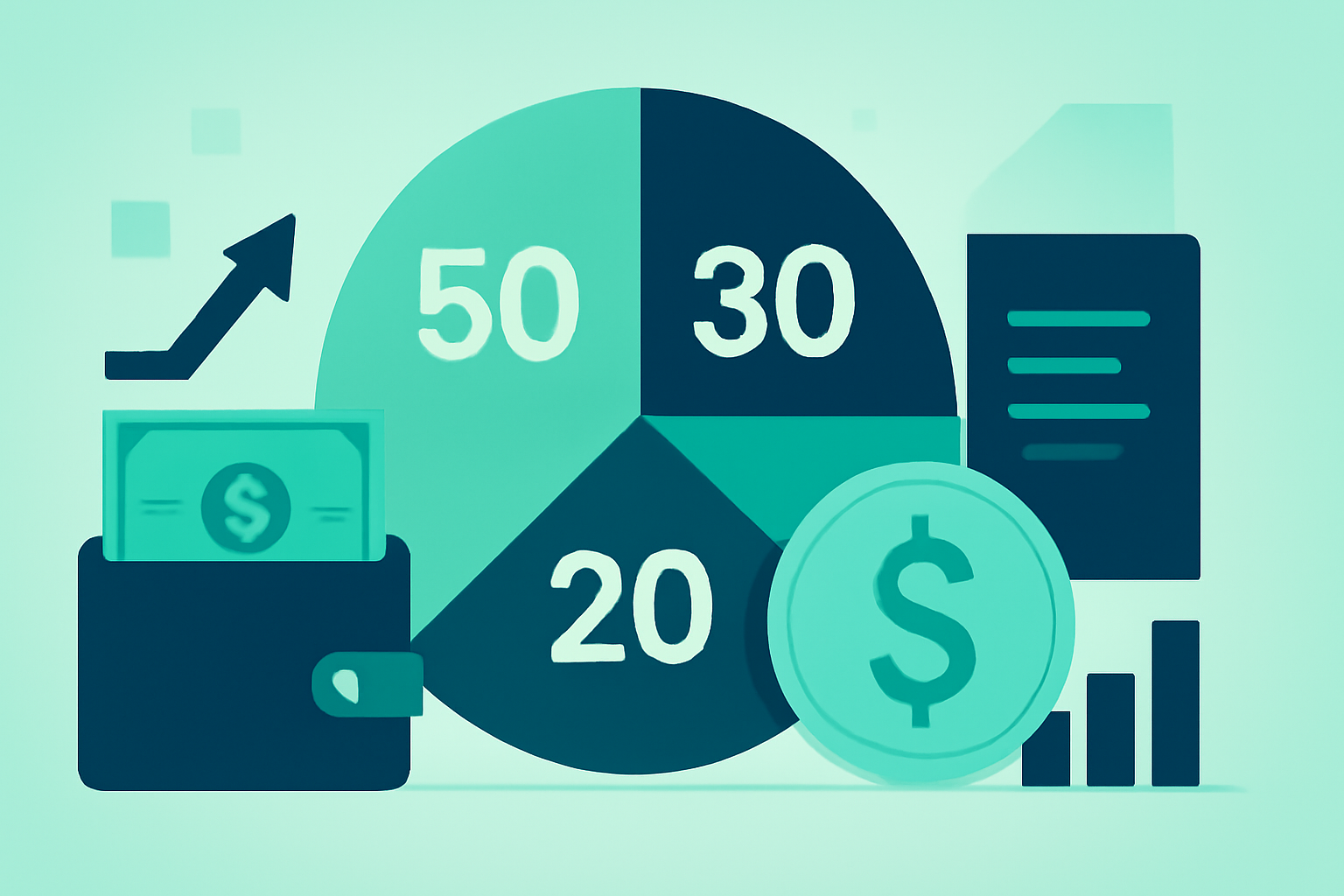
The 50/30/20 budget rule is a straightforward spending plan that divides your after-tax income into three key categories:
- 50% for Needs: These are the essential expenses you can't live without. They are the non-negotiables that keep a roof over your head, food on your table, and your body functioning.
- 30% for Wants: This category encompasses everything you enjoy but could technically live without. It's about enjoying life and treating yourself to things that bring you pleasure and enhance your lifestyle.
- 20% for Savings & Debt Repayment: This is where you build your financial future. This portion is dedicated to saving for future goals and aggressively paying down debt.
This rule is designed to be flexible enough for most people, providing a balanced approach to spending, saving, and enjoying life.
Calculating Your After-Tax Income
Before you can apply the 50/30/20 budget rule, you need to determine your after-tax income, also known as your net income or take-home pay. This is the exact amount that lands in your bank account after all deductions like federal, state, and local taxes, Social Security, Medicare, and any contributions to retirement accounts or health insurance premiums that are taken out before you receive your paycheck.
Example: Let's say your gross annual salary is $60,000. Your estimated annual tax burden (federal, state, etc.) might be around 25%. $60,000 * 0.25 = $15,000 in taxes. Your estimated annual after-tax income: $60,000 - $15,000 = $45,000. Your monthly after-tax income: $45,000 / 12 months = $3,750.
Action Step: Review your pay stubs from the last few months and calculate your average monthly take-home pay. This is the figure you'll use for all subsequent calculations.
Breaking Down the 50% Needs Category
The "Needs" category accounts for half of your monthly after-tax income. These are the bills that keep your life running smoothly. While the exact definition of a "need" can vary slightly from person to person, here are common examples:
- Housing: Rent or mortgage payments, property taxes, homeowner's insurance.
- Utilities: Electricity, gas, water, internet, phone service.
- Groceries: The food you buy to prepare meals at home.
- Transportation: Car payments, car insurance, gas, public transport fares, maintenance.
- Minimum Debt Payments: The required minimum payments on loans (credit cards, student loans, personal loans) – not extra payments.
- Healthcare: Health insurance premiums, co-pays, prescription costs.
- Childcare: If applicable.
Example (Continuing with $3,750 monthly income): Your 50% for Needs is $3,750 * 0.50 = $1,875.
Possible Breakdown of Needs:
- Rent: $1,200
- Utilities (electricity, internet, phone): $250
- Groceries: $300
- Minimum student loan payment: $125
- Total Needs: $1,875
If your essential needs consistently exceed 50% of your income, it’s a signal to re-evaluate your spending in other categories or explore ways to reduce your essential expenses.
Allocating 30% for Wants
The "Wants" category is for the lifestyle elements that bring joy and convenience. This 30% of your income allows you to live, not just survive. This is where you allocate funds for discretionary spending. Common examples include:
- Entertainment: Movies, concerts, streaming services, hobbies, dining out.
- Shopping: Clothing, electronics, home decor, non-essential items.
- Travel and Vacations: Saving for or funding trips.
- Gym Memberships: If not considered a health need.
- Personal Care: Haircuts, spa treatments.
- Subscriptions: Netflix, Spotify, magazine subscriptions, apps.
Example (Continuing with $3,750 monthly income): Your 30% for Wants is $3,750 * 0.30 = $1,125.
Possible Breakdown of Wants:
- Dining out and entertainment: $400
- Shopping (clothing, gadgets): $300
- Streaming services and subscriptions: $100
- Weekend trips and hobbies: $325
- Total Wants: $1,125
This is the most flexible category. If you need to free up cash for savings or debt, this is often the first place to look for potential cuts. Perhaps you could cook at home more often, find cheaper entertainment options, or pause some non-essential subscriptions for a period.
The Crucial 20% for Savings & Debt Repayment
This 20% is your financial rocket fuel. It's dedicated to building wealth, security, and freedom from debt. This is arguably the most important part of the 50/30/20 budget for long-term financial health. This category typically includes:
- Emergency Fund: Building a cushion for unexpected expenses like job loss, medical emergencies, or car repairs. Aim for 3-6 months of living expenses.
- Retirement Savings: Contributions to 401(k)s, IRAs, or other retirement accounts beyond any employer match that comes out of your gross pay.
- Extra Debt Payments: Paying more than the minimum on high-interest debt (like credit cards) to save money on interest and become debt-free faster.
- Investment Goals: Saving for a down payment on a house, a new car, or other significant purchases.
- Other Savings Goals: Vacation fund, education fund, etc.
Example (Continuing with $3,750 monthly income): Your 20% for Savings & Debt Repayment is $3,750 * 0.20 = $750.
Possible Breakdown of Savings & Debt:
- Emergency fund contribution: $200
- Extra credit card payment (above minimum): $300
- IRA contribution: $250
- Total Savings & Debt: $750
Prioritizing this 20% is key. If you're struggling to meet this target, it might mean you need to reduce spending in your "Wants" category or explore ways to increase your income.
Putting the 50/30/20 Budget into Practice
Adopting the 50/30/20 budget rule is about more than just numbers; it's about intentionality.
- Track Your Spending: For at least one month, meticulously track every dollar you spend. Use a budgeting app, a spreadsheet, or a simple notebook. This will reveal where your money is actually going.
- Categorize Your Expenses: Once you have your spending data, categorize each expense into Needs, Wants, or Savings/Debt. Be honest with yourself.
- Calculate Your Percentages: For the month you tracked, calculate the percentage of your after-tax income that went into each category.
- Adjust and Refine: Compare your actual spending percentages to the 50/30/20 targets.
- If your Needs are over 50%, look for ways to reduce them or increase your income.
- If your Wants are over 30%, identify areas to cut back.
- If your Savings/Debt is under 20%, prioritize making this a non-negotiable.
- Automate Your Savings: Set up automatic transfers from your checking account to your savings and investment accounts immediately after you get paid. Treat your savings goal as a bill that must be paid.
- Regularly Review: Your income and expenses will change. Schedule regular check-ins (monthly or quarterly) to ensure your budget is still working for you.
Common Mistakes to Avoid
- Inflating "Needs": Don't categorize every expense as a need. That new smartphone you "had to have" is likely a want.
- Ignoring Minimum Debt Payments: Ensure you always cover your minimum debt obligations to avoid late fees and damage to your credit score.
- Not Tracking: Without tracking, you're just guessing. You need data to make informed decisions.
- Setting Unrealistic Targets: If you're currently spending 70% on needs and 50% on wants, a sudden jump to saving 20% might be too difficult. Make gradual changes.
Key Takeaways
- The 50/30/20 budget is a simple framework: 50% for Needs, 30% for Wants, 20% for Savings & Debt Repayment.
- Always use your after-tax income for calculations.
- Needs are your essential living expenses.
- Wants are your discretionary spending for enjoyment.
- Savings & Debt repayment are crucial for financial security and growth.
- Tracking your spending and regularly reviewing your budget are essential for success.
By adopting the 50/30/20 budget rule, you gain a clear roadmap to reach your financial goals while still enjoying the fruits of your labor. It’s a powerful tool for building a stable and prosperous financial future.
Frequently Asked Questions
What is the 50/30/20 rule in simple terms?
Spend 50% of your take-home pay on needs, 30% on wants, and put 20% toward savings and debt payoff.
Is the 50/30/20 rule realistic in high-cost cities?
Often not at first. If housing alone passes 50%, try 60/20/20 as a bridge and work the numbers back toward the standard split as income grows.
Does the 20% include retirement contributions?
Yes. Employer-matched 401(k) contributions, IRA deposits, emergency-fund savings, and extra debt payments all count.
Do I use gross or net income?
Net — the money that actually lands in your account after taxes and payroll deductions.