Inflation 101: How It Eats Your Savings
Inflation explained: learn how rising prices erode your savings and discover actionable strategies to protect your wealth from this silent wealth killer.
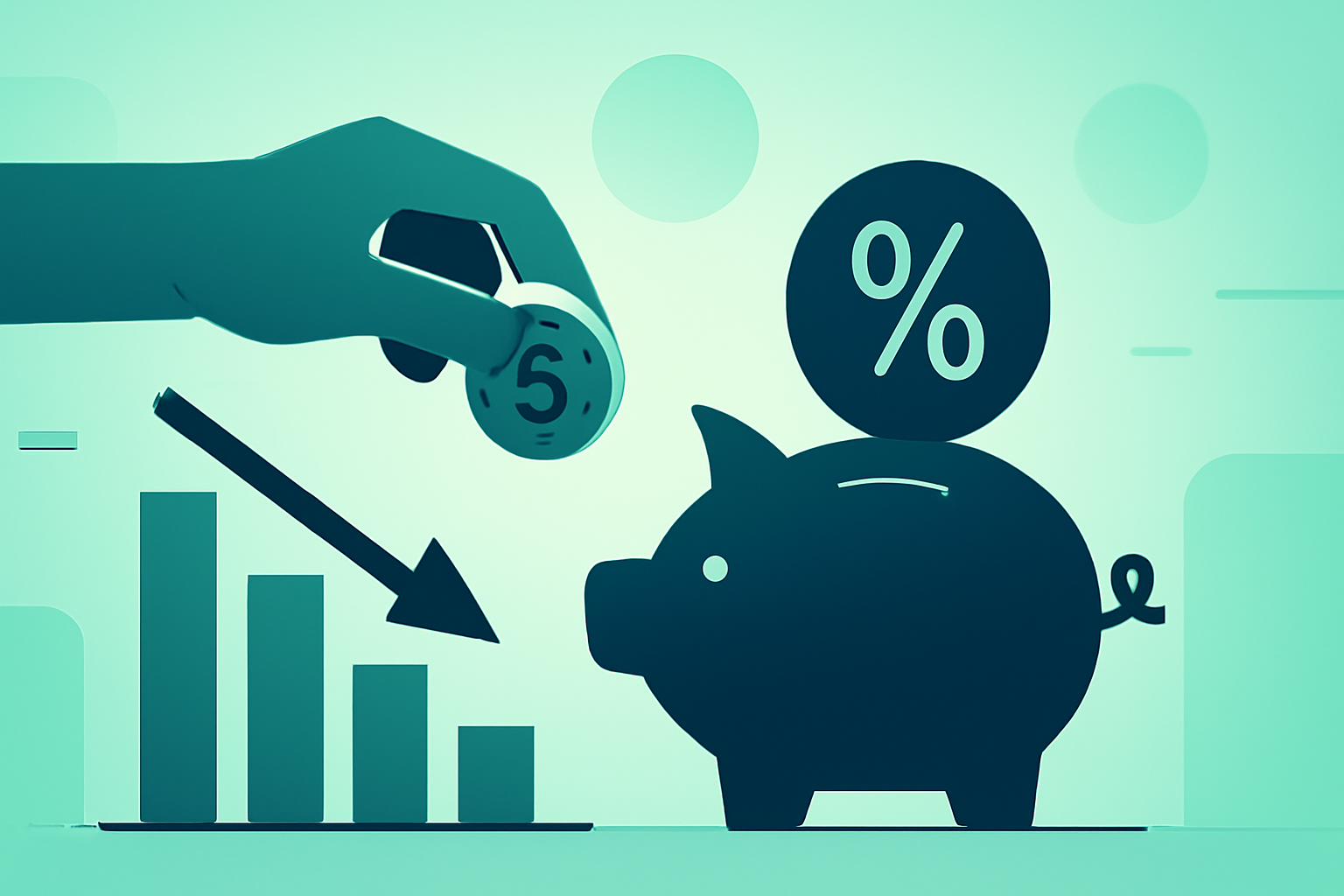
The price of your morning coffee creeping up, the grocery bill that seems to grow with every visit – these are all tangible signs that inflation is at play. Understanding inflation explained is crucial because it’s not just about minor price adjustments; it’s a silent force that can significantly erode the purchasing power of your hard-earned money and, consequently, your savings.
What is Inflation? The Basics of Rising Prices
At its core, inflation is the general increase in prices of goods and services in an economy over a period of time. When the general price level rises, each unit of currency buys fewer goods and services. Consequently, inflation reflects a reduction in the purchasing power per unit of money. You might notice this when the same $20 bill that used to fill your gas tank now only gets you halfway, or when a loaf of bread that cost $2 last year now rings up at $2.50. This isn't a temporary blip; it's the consistent upward march of prices that defines inflation.
How Does Inflation Actually Work? Demand, Supply, and Money
Several factors contribute to inflation, often working in tandem. One of the most significant drivers is demand-pull inflation. This occurs when there's too much money chasing too few goods. Imagine a sudden surge in demand for a popular new electronic gadget. If manufacturers can't keep up with production, they can charge higher prices because consumers are willing to pay more to get their hands on the limited supply.
Another key contributor is cost-push inflation. This happens when the costs of producing goods and services increase. For instance, if the price of oil spikes, transportation costs for almost all goods rise, leading businesses to pass those increased expenses onto consumers through higher prices. Labor costs also play a role; if wages rise significantly across an economy, businesses may raise prices to cover these increased payroll expenses.
Finally, the money supply is a critical factor. If a central bank prints too much money or injects a large amount of liquidity into the economy, it can devalue the currency. More money in circulation, without a corresponding increase in the production of goods and services, can lead to prices rising across the board, demonstrating inflation explained in terms of monetary policy.
The Direct Impact: How Inflation Eats Your Savings
This is where inflation truly hits home for your personal finances. When inflation rises, the money you have saved loses value. Let's say you have $10,000 in a savings account earning a modest 1% interest annually. If the inflation rate is 3%, your money is actually losing purchasing power.
Here’s how to break it down:
- Nominal vs. Real Return: Your nominal return is the stated interest rate (1% in our example). Your real return is your nominal return minus the inflation rate. In this case, your real return is 1% - 3% = -2%. This means that even though your savings balance is technically growing, what that money can buy is decreasing by 2% each year.
- Erosion of Purchasing Power: Over time, this erosion becomes significant. If you saved $10,000 today and inflation averages 3% for 10 years, that $10,000 will only have the purchasing power of approximately $7,441 in today's dollars by the end of the decade. That's a nearly $2,600 loss in what your money can actually purchase.
Inflation vs. Savings Returns: The Race Most Fall Behind In
The graph below illustrates this unfortunate reality. For many years, the average interest rate on typical savings accounts has lagged far behind the average inflation rate. This means that holding cash in low-interest accounts is a losing proposition during periods of even moderate inflation.
- Example: If your savings account earns 0.5% interest and inflation is 2%, you are effectively losing 1.5% of your purchasing power each year. Over five years, $10,000 would lose over $700 in real value.
This is why simply stashing cash under your mattress or in a basic savings account can be detrimental to your long-term financial goals. The goal of investing isn't just to grow your money, but to grow it faster than inflation to maintain and increase your purchasing power.
Strategies to Combat Inflation and Protect Your Wealth
Understanding inflation explained is just the first step; taking action is key. Here are some strategies to help your money keep pace:
1. Invest in Assets That Tend to Outperform Inflation
Stocks have historically been a strong performer in combating inflation over the long term. While they come with volatility, the potential for higher returns can outpace rising prices. Real estate has also traditionally been a hedge against inflation, as property values and rental income often rise with general price levels.
2. Consider Inflation-Protected Securities
Treasury Inflation-Protected Securities (TIPS) are U.S. government bonds whose principal is adjusted by the Consumer Price Index (CPI). This means that as inflation rises, the principal of your TIPS also increases, offering direct protection against inflation. The interest payments you receive are then calculated on this adjusted principal.
3. Diversify Your Portfolio
Don't put all your eggs in one basket. A well-diversified portfolio that includes a mix of stocks, bonds, real estate, and potentially commodities can help weather different economic conditions, including inflationary periods.
4. Revisit Your Budget Regularly
With rising prices, your expenses will inevitably increase. Regularly reviewing your budget allows you to identify areas where you can cut back, reallocate funds, or find more cost-effective alternatives. This proactive approach ensures that your spending aligns with your income and savings goals, even as prices change.
Common Mistakes to Avoid When Dealing with Inflation
- Ignoring Inflation Entirely: The most significant mistake is simply not acknowledging how inflation affects your savings. Assuming your money will maintain its value without any strategy is a recipe for financial decline.
- Keeping Too Much Cash: While an emergency fund is crucial, holding excessive cash in low-interest accounts during inflationary periods is like setting your money on fire, slowly but surely.
- Making Emotional Investment Decisions: Market volatility can be unsettling, but making panic-driven decisions based on short-term price fluctuations can derail long-term strategies. Stick to your plan.
Key Takeaways
- Inflation is the rise in the general price level of goods and services, reducing the purchasing power of money.
- Demand-pull, cost-push, and money supply are key drivers of inflation.
- Inflation directly erodes the value of your savings, meaning your money buys less over time.
- Historically, savings account interest rates often fall short of inflation, resulting in a loss of real value.
- To combat inflation, consider investing in assets that historically outperform inflation, explore inflation-protected securities like TIPS, and maintain a diversified investment portfolio.
- Regularly review your budget and avoid common mistakes like ignoring inflation or keeping excessive cash in low-yield accounts.