Crypto Trading vs. Stock Investing: Beginner's Guide
Deciding between cryptocurrency trading vs stock market investing as a beginner? This guide breaks down risks, returns, and practical steps for each.
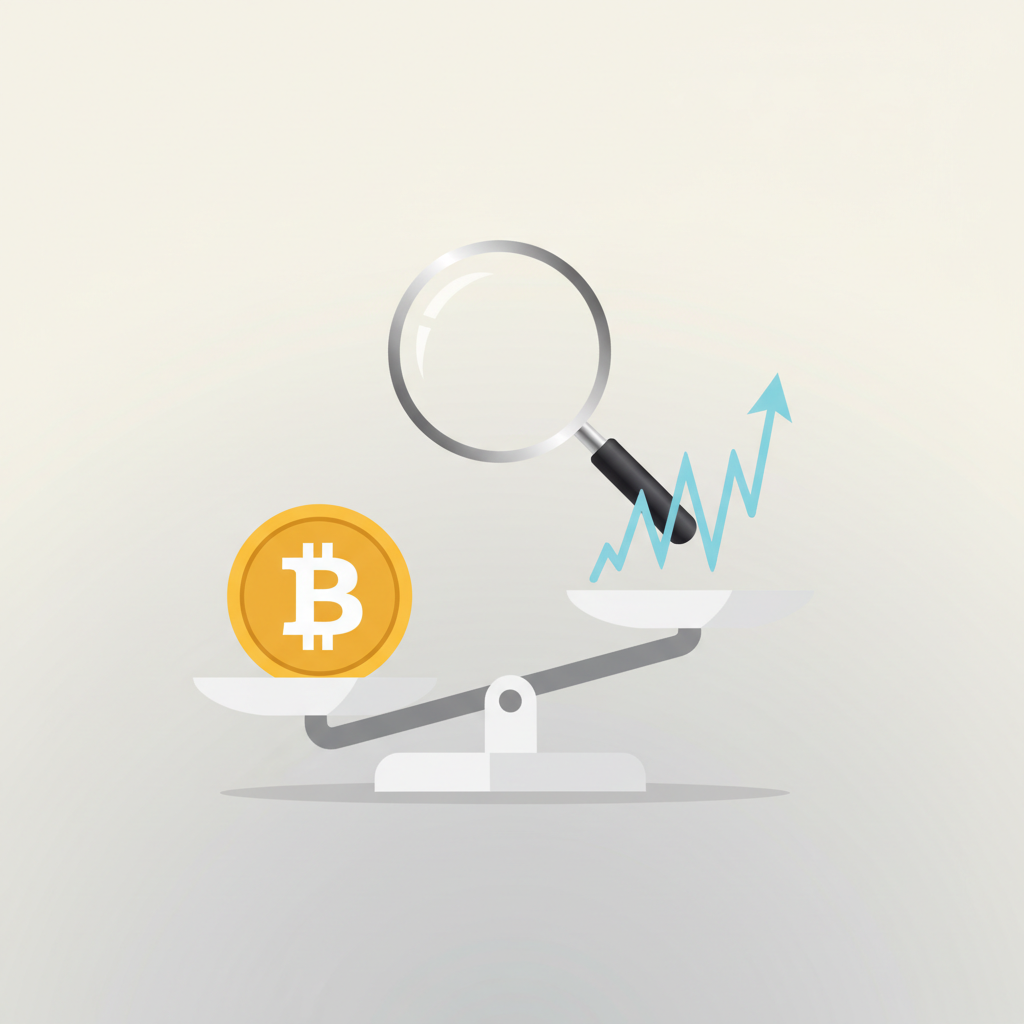
Cryptocurrency Trading vs Stock Market Investing: A Beginner's Guide
Deciding where to put your hard-earned money as a beginner can feel overwhelming, especially when comparing cryptocurrency trading vs stock market investing. Both offer potential for growth, but they come with distinct characteristics, risks, and learning curves. This guide will break down the essential differences, empowering you to make an informed decision based on your financial goals, risk tolerance, and time horizon.
We'll explore what each entails, the typical approaches for beginners, and practical considerations to help you navigate these dynamic financial landscapes. Our aim is to provide a clear, unbiased comparison to set you on the right path.
Understanding the Fundamentals: What Are They?
Before diving into the comparison, let's briefly define what we mean by cryptocurrency trading and stock market investing.
Cryptocurrency Trading Explained
Cryptocurrency trading involves speculating on the price movements of digital assets like Bitcoin (BTC), Ethereum (ETH), or Solana (SOL) on centralized or decentralized exchanges. The goal is to buy low and sell high, or short-sell assets if you believe their value will decline.
- Decentralized Nature: Unlike traditional currencies, cryptocurrencies operate on a decentralized network called a blockchain, independent of central banks or governments.
- High Volatility: Prices can fluctuate dramatically in short periods, offering opportunities for quick gains but also significant losses.
- 24/7 Market: Crypto markets never close, allowing for trading around the clock.
Stock Market Investing Explained
Stock market investing involves buying shares of publicly traded companies, such as Apple (AAPL), Amazon (AMZN), or Coca-Cola (KO). When you buy a stock, you're purchasing a tiny ownership stake in that company. Investors typically aim to profit from the company's growth, leading to an increase in stock price, or through dividends paid out to shareholders.
- Regulated Market: Stock markets are heavily regulated by governmental bodies (e.g., SEC in the US), providing a layer of investor protection.
- Established Companies: Investments are often in established businesses with long operating histories and public financial records.
- Trading Hours: Traditional stock exchanges operate during specific business hours.
Key Differences: Cryptocurrency Trading vs Stock Market Investing
The fundamental differences between these two investment avenues impact everything from potential returns to regulatory oversight and investor behavior.
1. Market Maturity and Regulation
The stock market is a mature, well-established financial system that has existed for centuries. It's characterized by:
- Extensive Regulation: Governed by robust legal frameworks designed to protect investors, ensure transparency, and prevent fraud. This includes requirements for financial disclosures, auditing, and trading rules.
- Institutional Participation: Dominated by large institutional investors like pension funds, mutual funds, and hedge funds, alongside individual investors.
- Proven Track Record: Decades of data and economic theory underpin stock market analysis and investment strategies.
In contrast, the cryptocurrency market is relatively new, originating with Bitcoin in 2009. It's known for:
- Evolving Regulation: Regulatory frameworks are still developing and vary significantly across countries. This can lead to uncertainty and increased risk.
- Less Institutional Dominance: While institutional interest is growing, individual retail investors historically played a larger role.
- Limited Historical Data: Compared to stocks, the short history of cryptocurrencies means less data for long-term trend analysis and predictive modeling.
2. Volatility and Risk
This is perhaps the most significant distinction for beginners.
- Cryptocurrency Volatility: Digital assets are infamous for extreme price swings. A cryptocurrency's value can surge or plummet by double-digit percentages in a single day, or even hours. This high volatility presents opportunities for rapid gains but also carries an elevated risk of substantial losses. Factors influencing volatility include technological developments, regulatory news, social media sentiment, and macroeconomic events.
- Stock Market Volatility: While stocks can also be volatile, especially individual growth stocks or during economic downturns, the overall market and well-established companies tend to be less volatile than most cryptocurrencies. Diversified stock portfolios are generally considered less risky than a concentrated crypto portfolio. Long-term stock market returns have historically shown a positive trend, albeit with periodic corrections.
3. Investment Horizon and Strategies
The typical investment horizon and strategies often differ between these two asset classes.
- Cryptocurrency Trading: Often associated with shorter-term trading strategies aimed at profiting from rapid price movements. Day trading, swing trading, and even scalping are common. However, a growing number of investors also "hodl" (hold on for dear life) cryptocurrencies for the long term, betting on their future adoption and technological impact.
- Stock Market Investing: Historically favored for long-term wealth building. Strategies like "buy and hold," value investing, and growth investing are common, focusing on companies with strong fundamentals expected to grow over years or decades. While short-term stock trading exists, beginners are often advised to adopt a long-term perspective.
4. Accessibility and Learning Curve
Both markets are more accessible than ever, but their learning curves differ.
- Cryptocurrency: Setting up an account on a crypto exchange (e.g., Coinbase, Binance) is often straightforward. However, understanding blockchain technology, different consensus mechanisms, wallet security, and the nuances of various altcoins can be complex. There's also a significant focus on technical analysis for trading.
- Stocks: Opening a brokerage account is also simple (e.g., Charles Schwab, Fidelity). The learning curve involves understanding financial statements, economic indicators, industry analysis, and fundamental analysis. While technical analysis is also used, fundamental analysis often plays a larger role in long-term investing.
Practical Considerations for Beginners
So, which one is "better" for you as a beginner? There's no single answer, as it depends on your individual circumstances. Let's break down practical steps and considerations.
Before You Start: Essential Steps
Regardless of whether you choose crypto or stocks, these foundational steps are crucial:
- Define Your Financial Goals: Are you saving for a down payment, retirement, or just experimenting with a small amount? Your goals will dictate your risk tolerance and investment horizon.
- Assess Your Risk Tolerance: How much money can you afford to lose without it significantly impacting your financial well-being or sleep? Be honest with yourself.
- Educate Yourself: Never invest in something you don't understand. Read books, reputable financial blogs, and educational resources.
- Start Small: Begin with an amount you are comfortable losing. This is especially true for highly volatile assets like cryptocurrencies.
- Diversify (Even within your chosen asset class): Don't put all your eggs in one basket.
Investing in the Stock Market: A Beginner's Approach
For many beginners, especially those new to investing entirely, the stock market offers a more traditional and often less volatile entry point.
- Start with Index Funds or ETFs: These are baskets of stocks (or other assets) that track a particular index, like the S&P 500. They offer instant diversification and generally have lower fees than actively managed funds.
- Example: An S&P 500 ETF (like SPY or VOO) gives you exposure to 500 of the largest U.S. companies.
- Dollar-Cost Averaging (DCA): Invest a fixed amount of money at regular intervals (e.g., $100 every month), regardless of market fluctuations. This strategy reduces the impact of volatility and removes the need to time the market.
- Focus on Long-Term Growth: Aim to hold investments for several years or decades to benefit from compounding returns.
- Open a Brokerage Account: Research reputable online brokers known for low fees and good educational resources.
Exploring Cryptocurrency Trading: A Cautious Approach
If you're intrigued by the potential of crypto, approach it with extreme caution and a clear understanding of the risks.
- Allocate a Small Percentage: Limit your crypto allocation to a very small portion of your overall investment portfolio (e.g., 1-5%). Consider this your "fun money" or "experimental capital."
- Focus on Major Cryptocurrencies: Start with well-established assets like Bitcoin (BTC) and Ethereum (ETH), which have larger market caps and more liquidity than lesser-known altcoins.
- Understand the Technology: Learn about the underlying blockchain technology and the use cases of the cryptocurrencies you invest in. Don't just follow hype.
- Security is Paramount: Learn about secure wallet practices (hardware wallets for larger amounts), two-factor authentication, and avoiding phishing scams.
- Use Reputable Exchanges: Choose well-known, regulated cryptocurrency exchanges with strong security records.
- Beware of Scams: The crypto space is unfortunately rife with scams, including "pump and dump" schemes and fraudulent projects. Always do your own research (DYOR).
Comparison Table: Crypto Trading vs. Stock Market Investing
| Feature | Cryptocurrency Trading | Stock Market Investing |
|---|---|---|
| Market Maturity | Nascent, rapidly evolving | Established, mature (centuries old) |
| Regulation | Evolving, varies by region, often less stringent | Highly regulated, strong investor protection |
| Volatility | Extremely high, significant price swings | Moderate to high (individual stocks), lower (indices) |
| Market Hours | 24/7, 365 days a year | Fixed business hours (e.g., Mon-Fri, 9:30 am - 4 pm ET) |
| Typical Horizon | Short-term trading common, long-term "hodling" growing | Long-term growth & wealth accumulation |
| Asset Class | Digital assets, blockchain-based | Ownership shares in public companies |
| Underlying Value | Network adoption, utility, scarcity, tech innovation | Company earnings, assets, growth potential |
| Beginner Risk | Very high | Moderate |
The Empowering Choice: Your Path Forward
Ultimately, the choice between cryptocurrency trading vs stock market investing as a beginner is a personal one.
- For the extremely risk-averse or those prioritizing stability and a proven long-term track record, the stock market (especially via diversified index funds) is generally the more conservative and recommended starting point. It offers a structured environment for learning the fundamentals of investing.
- For those with a higher risk tolerance, a genuine interest in disruptive technology, and a willingness to dedicate time to understanding a new, volatile asset class, a small, speculative allocation to cryptocurrency could be considered. However, it should be treated as a high-risk venture, not a guaranteed path to quick riches.
Many experienced investors advocate for a diversified portfolio that may include both traditional assets (stocks, bonds) and a small, carefully considered allocation to alternative assets like cryptocurrencies. The key is to:
- Understand what you're buying.
- Know your personal risk limits.
- Never invest more than you can afford to lose.
Start with education, make informed decisions, and adjust your strategy as you gain experience and as your financial situation evolves. The journey of investing is a marathon, not a sprint.
FAQ
Q1: Is cryptocurrency trading or stock market investing more profitable for beginners?
There's no guaranteed answer. Cryptocurrency trading can offer higher percentage returns in short periods due to extreme volatility, but it also carries significantly higher risk of substantial losses. Stock market investing, particularly in diversified portfolios like index funds, offers more stable and historically proven long-term growth, albeit typically at a slower pace. For beginners, the lower risk profile of stocks often makes them a more suitable starting point for consistent wealth building.
Q2: What's the minimum amount needed to start investing in stocks or crypto?
You can start investing in stocks with as little as $1, thanks to fractional shares offered by many brokers. For crypto, you can often buy fractions of a Bitcoin or Ethereum for a few dollars. The "minimum" isn't the issue; rather, it's starting with an amount you're comfortable losing, especially in crypto, and then consistently investing more over time.
Q3: How do I manage risk effectively in either market?
For stocks, diversify your portfolio across different companies and industries, consider index funds, and use dollar-cost averaging. For crypto, only invest a small percentage of your overall portfolio, stick to major cryptocurrencies, research projects thoroughly, and prioritize security for your digital assets. In both cases, never invest money you can't afford to lose, and avoid emotional decisions.
Q4: Are there tax implications for both crypto and stock investments?
Yes, both have tax implications. In many countries, capital gains (profits from selling an asset for more than you bought it) from both stocks and cryptocurrencies are taxable. Short-term capital gains (assets held for less than a year) are typically taxed at a higher rate than long-term capital gains. It's crucial to keep detailed records of your transactions and consult with a tax professional for guidance specific to your jurisdiction.
Q5: Can I invest in both cryptocurrency and the stock market?
Absolutely. Many investors maintain a diversified portfolio that includes both traditional assets like stocks and bonds, and a smaller, speculative allocation to cryptocurrencies. This approach aims to capture potential high growth from crypto while maintaining a foundation of more stable assets. The key is to manage the percentage allocation based on your personal risk tolerance and financial goals.
Q6: What's the biggest mistake a beginner can make in either market?
The biggest mistake is investing based on hype or fear, without conducting thorough research, and risking more capital than they can afford to lose. Chasing "get rich quick" schemes, panicking during market dips, or putting all your money into a single, unproven asset are common pitfalls. Always prioritize education, risk management, and a long-term perspective.